
Tihany > Memorial places

Memorial places

1. Óvár

The oval entrechment system of the hill called Óvár, the largest and relatively well-preserved earthwork of the Balaton region, was built around the late Bronze Age and early Iron Age. It was a princely residence and provided shelter for the people in times of war.

2. Knollgraves (Halomsírok)

A several meter high knoll was built of limestonc and carth over the graves of the princes of the carthwork in the southern hillside next to the present graveyard. A part of the knollgraves were dug up in the early seventies: potsherds, bronze jewellery and charred grains of wheat were found in the cremation graves.

3. Hermit's place (Barátlakások)

In the eastern slope of Óvár, Greek Orthodox hermits hollowed out their cells, a chapel and a dinning room from the rocks in the 11th-14th century. This is the only hermit's place which is a relatively well-preserved in the Carpathian Basin and even in Central Europe. Its local name is Barátlakások (Friar habitations). Not far from here, you can find the Ciprián spring, previously called Russian fountain, which is the only spring of Tihany.

4. Calvary (Kálvária)

The most beautiful 20th century calvary of the country was built within a few years time, beginning in 1926 , from public contributions. The stones with inscription and bronze relief symbolising the suffering of Christ and the Way of the Cross were raised on behalf of the historic counties and royalé boroughs of Hungary. The stone cross of Christ, in the background, there are three knolls built of limestone blocks and the bronze memorial of Hungarian King Charles IV: The structures of the Calvary were demolished in 1960.

5. Echo (Visszhang)

Records from the early 19th century say that words shouted from the Echo hill return from the northern wall of the church building. The earliest Balaton guide-book, issued in 1848, says that guests in Füred take excursions to Tihany to listen to the echo because the church wall cleary returns voices up to 15 syllables. The Echo of Tihany, a topic covered by famous poets, has been gradually fading since the sixties but it can be still enjoyed especially in windless, quiet evenings.

6. The church building and its neighbourhood

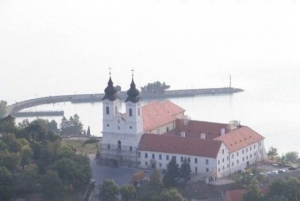
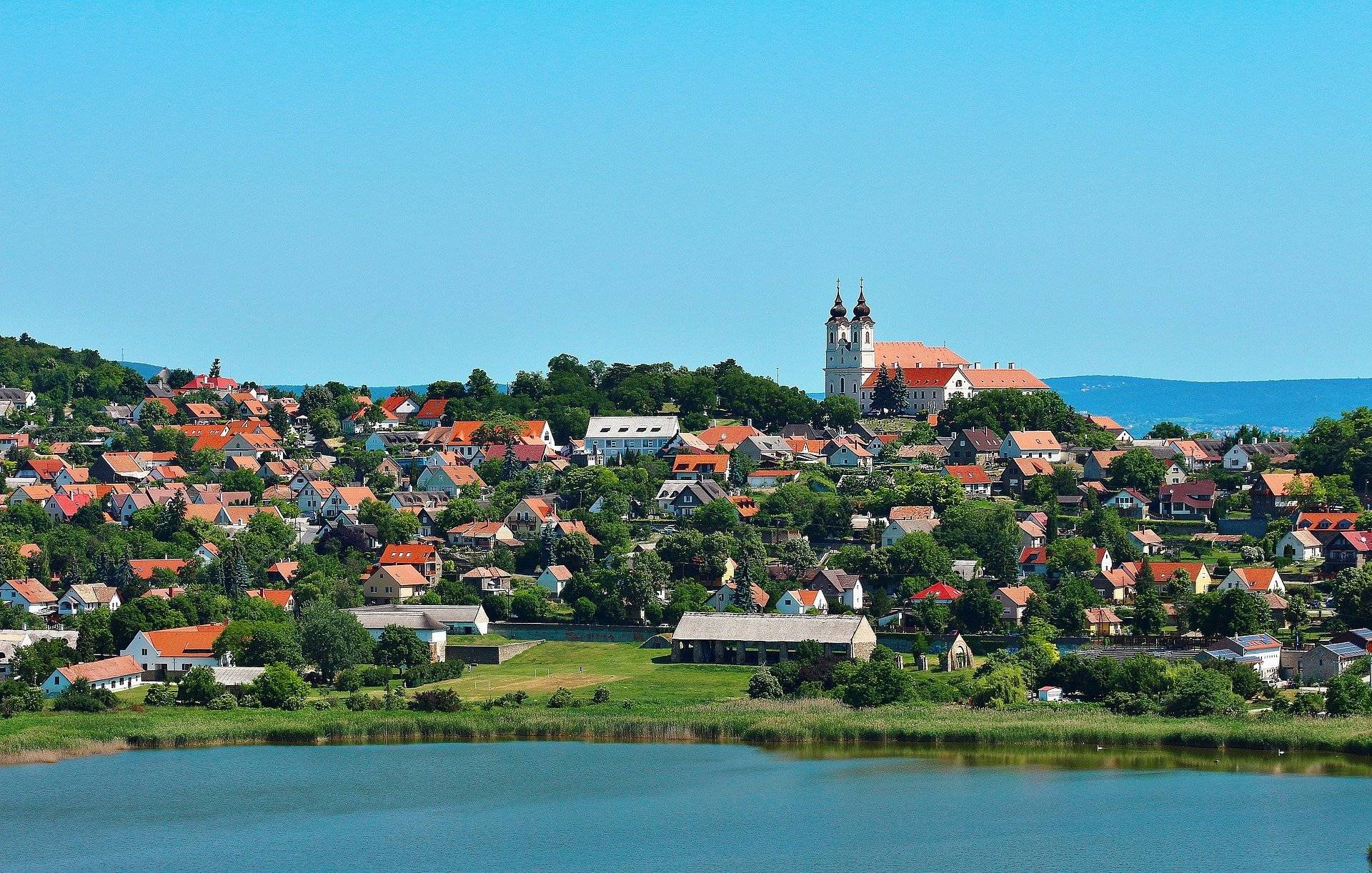
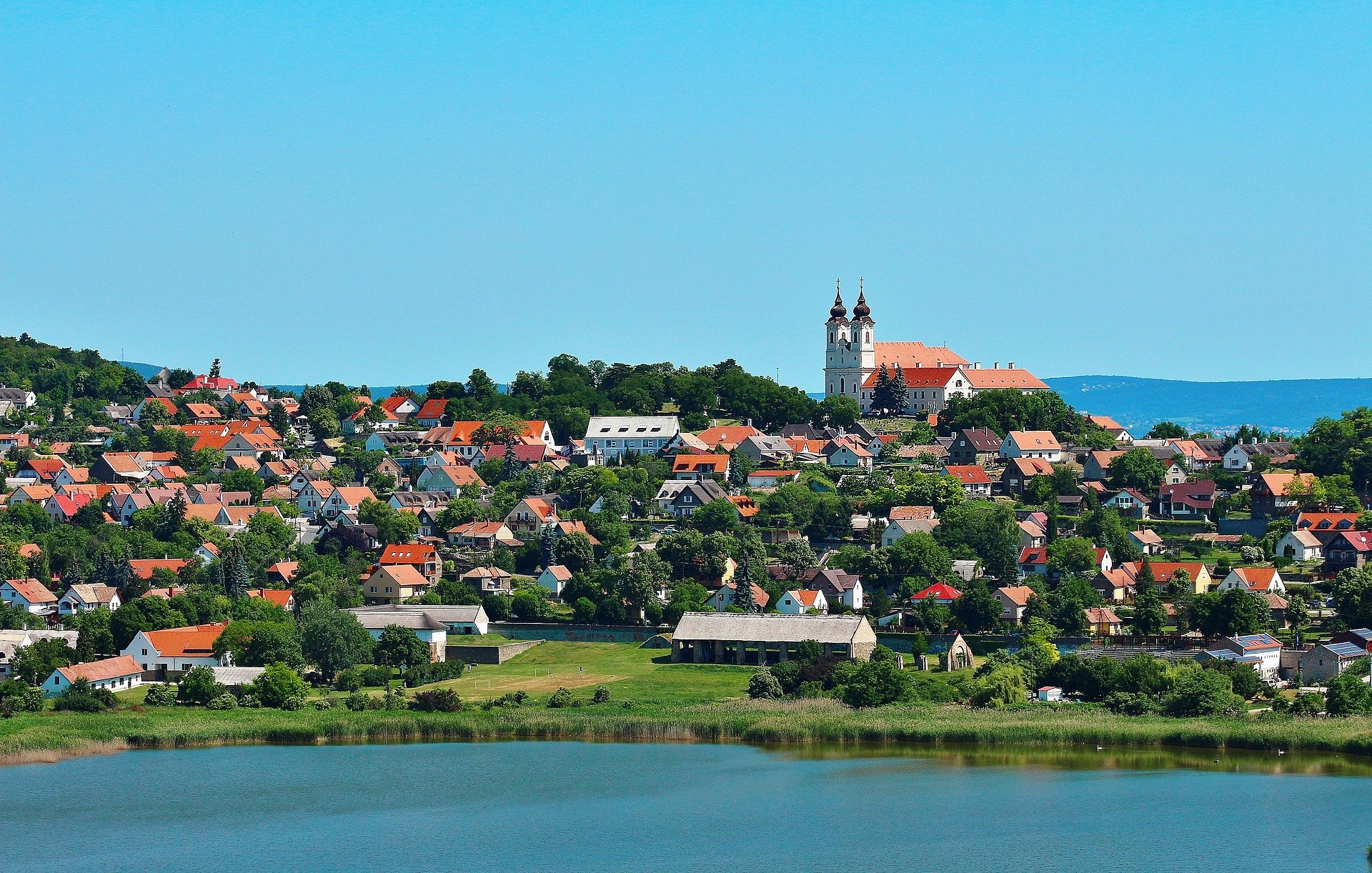
King Andrew I. founded a monasetry and a royal burialplace in Tihany in 1055, in accordance with the tradition of Christian monarchs. Monastery life ceased in the middle of the fifteen hundreds when the building was transformed into a fortress against the Turks, who never occupied it. The fortress, of which no detailed plans have remained, was demolished in the Kuruts times in the 17th centuy. The walking way between the Echo hill and the church is named after Castellan István Pisky.

The Pannonhalma Archabbacy got hold of the monastery and the propery of the Tihany Abbey in 1716. The present buildings were completed in 1754.

From Pisky walking way, there is nice view on the most beautiful harbour of Balaton and the mole built according to the design of Dezső Nagy Káli between 1909 and 1911.

7. Pale hill (Nyársas-hegy)

The name Nyársas-hegy, which is located next to the place where a fortress stood in the Middle Ages, goes back to the times when the soldiers of the fortress impaled the turks who abducted Hungarian women and screwed the peasantry.

8. Gallows hill (Akasztó-domb)

In 1714, King Sigismund granted jus gladii, power of life and death, to the Abbey to arrest, convict and execute malefactors. This was the spot where the gallows pole was erected. Akasztó-domb was also a place of special fishing method, practised only in Tihany. One of the fishermen called "hill walker" climbed up to the top of the hill, followed the movements of the pelecus ("watched fish") shoal and gave instructions to the fishermen waiting in the boat to lay the net.

9. Church ruins at Apáti

Two of the three settlements of Tihany peninsula, Ujlak and Apáti, were demolished in the Turkish times and only the church ruins remained. The church ruins at Apáti are located at the northern part of the peninsula. The rebuilt church dates bak to the 12nd - 13th century.

10. Church ruins at Ujlak

The ruins of the church - the sanctuary wall still stands - area located at the southern part of the peninsula. They keep the memory of an ancient ferry village.