
Monuments
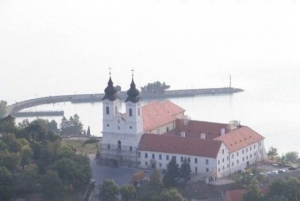
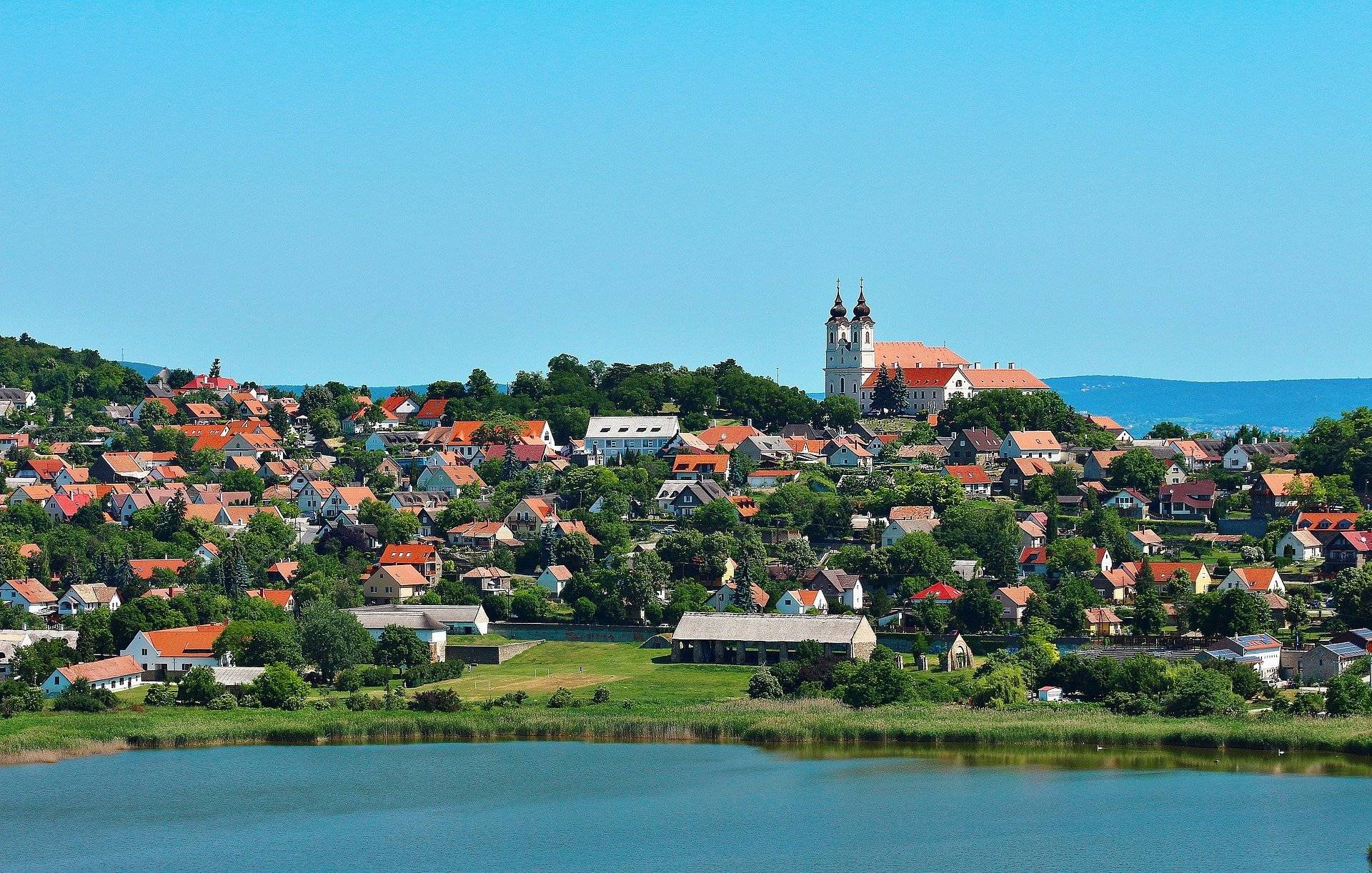
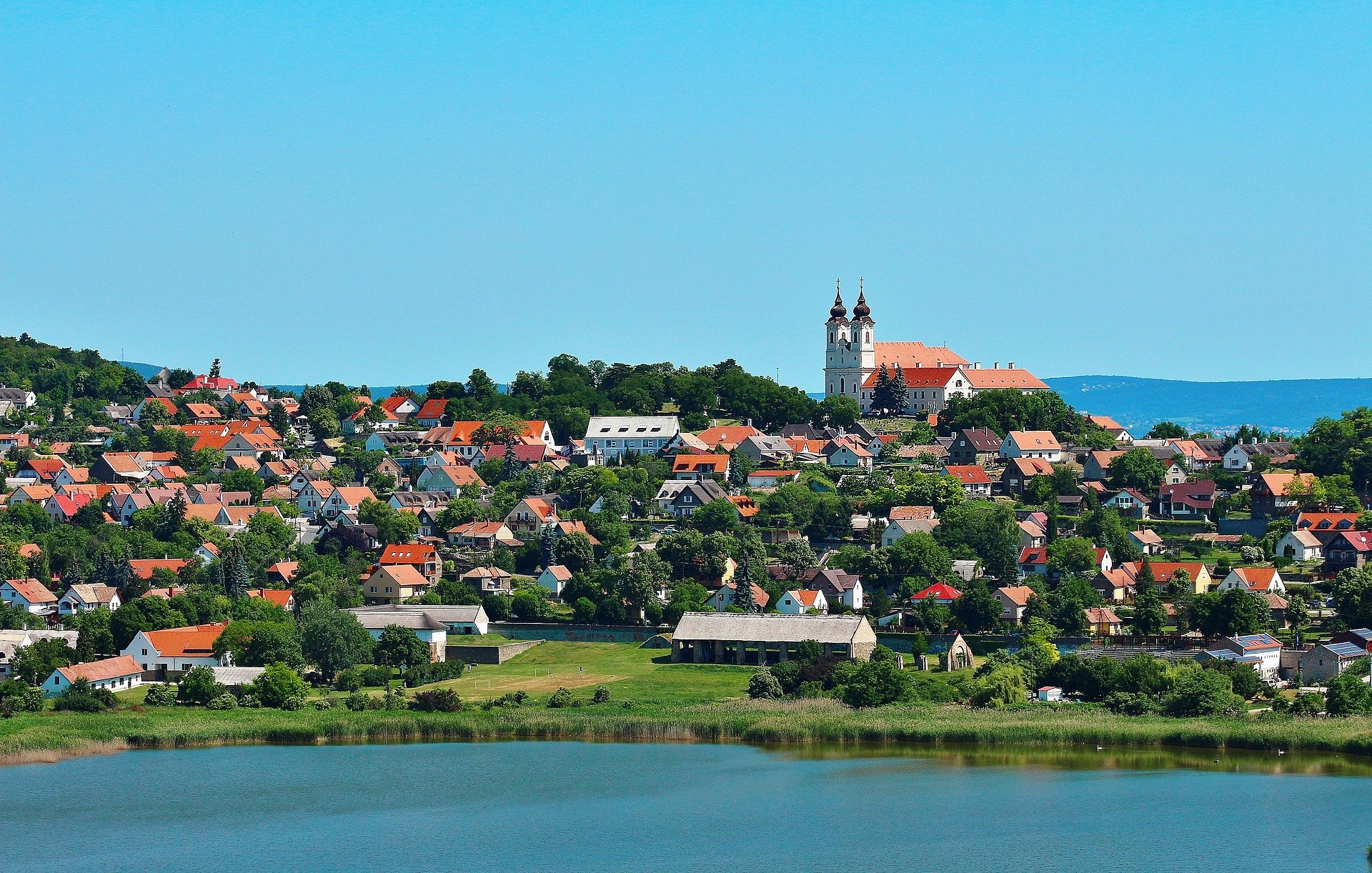
1. Baroque church and convent of the Benedictine Abbey
The interior of the baroque church was built by Abbot Ágoston Lécs was made by wood-carver and cabinetmaker Sebastian Stuhlhof between 1754 and 1779.
The furnishings and the gilded wooden sculptures are excellent pieces of the Central Europen baroque art, just as the frescos painted by Károly Lotz, Bertalan Székely, Lajos Deák-Ébner during the restoration works in 1889-1890. The interior was fully restored by 1996, after the church was returned to the Benedictine Abbey in 1994.
2. Crypt of King Andrew I.
The roman hall crypt, which was built by King Andrew I. at the time when the monasetry was founded in 1055, is the only original royal burial place in Hungary that remained intact. Here lies the king, who died in 1060.
3. Calvinist church, belfry
The Calvinist church, built in 1793, is a simple building with a square groundplan. The belfry, standing on four white columns and covered with shingle, is located west of the church building.
4. Former farmstead of the Abbey
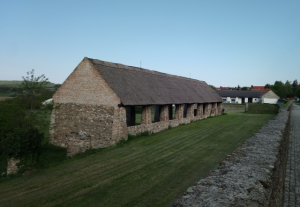
In the property of the Tihany Abbey, allodial farming has been taking place since the 18th century. The buildings of the former farmstead were built at the shore of Belső-tó next to the village in eighteen thirties. The sheepshed and the barn with eleven columns are still original. They are used as a workshop by the students of the Art College each summer.
The renovated buildings of the cattle-shed are used for cultural purposes by Kőrösi Csoma Foundation. The former servant's quarters are refurbished and used as dwelling houses.
5. Former wine cellar and press-house of the Abbey
Vine growing around Balaton dates back to Roman times. Tihany became significant wine-district at the time of the foundation of the monasetry. The cellar with a unique double cross groundplan and the classicist press-house were built at the northern shore of Belső-tó in 1822 for processing and storing the vine grown in the property of the Abbey. The cellar has excellent wine also today.
6. Former granary of the Abbey
The granary built in the 19th century played an important role in the community life of the village. It was two storeys, it is rough-casted and divided by white ribbons and window-frames according to the local tradition. Presently it serves as community centre.
7. Former inn of the Abbey
The inn built in the early 19th century played an important role in the community life of the vilage. It was recently rebuilt and Fogas Csárda is very popular with tourists also today.
8. Former house of the physician of the Abbey
The present post office building used to be the dwelling house of the physician of the Abbey. The single-storey building was built in simplified neoclassic style in the 19th century with
9. Former Hotel Sport
Hotel Sport, wich was built in 1923, is surrounded by a park and function as a restaurant today. It is still one of the most beautiful buildings in the neighbourhood.
10. Balaton Limnology Research Institute
The Institute was founded for Balaton research and special biological research. The five pavilion swere was built according to the design of István Kotsis in 1926-27.
11. Summer castle of Archduke Joseph Habsburg
The beautiful building, located at a 4 acre park, was disegned also by István Kotsis. It was built as a summer castle for Archduke Joseph Habsburg in 1924-25.
Relics of the folk architecture, and peasant houses
The traditional culture of Tihany, which dates back to the Middle Ages, was alive until the nineteen-fifties. The typical inhabitants of the village working at the properties of the fortress and the Abbey were poor people and this fact is expressed in their architecture. It was not unusual that several small peasant's houses were built on one single site. The houses were built without a chimney - the smoke exhausted from the central kitchen ("smoky kitchen") through the roof and the door until, in the 19th century, so-called freechimney kitchens were built. Next to the kitchen there was one room on the one side and a larder, a barn and a shed on the other side. The kitchen was heated by oven, the rooms by tile stove fired with coal. The walls were whitewashed wattled plaster or stone wall of basaltic tuff with characteristicgrey colour. The roof was thatched with reeds. The furniture was made of hardwood and served several generations. Some of the peasant houses with original furniture can be visited by the tourists (Parasztgazda house and Halászcéh house along Pisky walking way, Pottery house at the end of the Batthyány J. street) other are still occupied or serve other tourist purposes.
Benedictine abbey museum
The Museum is located in the premises of the convent, which is a single-storey building attached to the southern wall of the church. The wings surround a quadrangle. The last ruler of Hungary King Charles Habsburg IV and QueenZita were interned here by the Allies between 26 and 31 October 1921 before they were expelled to Madeira island.
The museum attracts tourists with temporary exhibitions.